
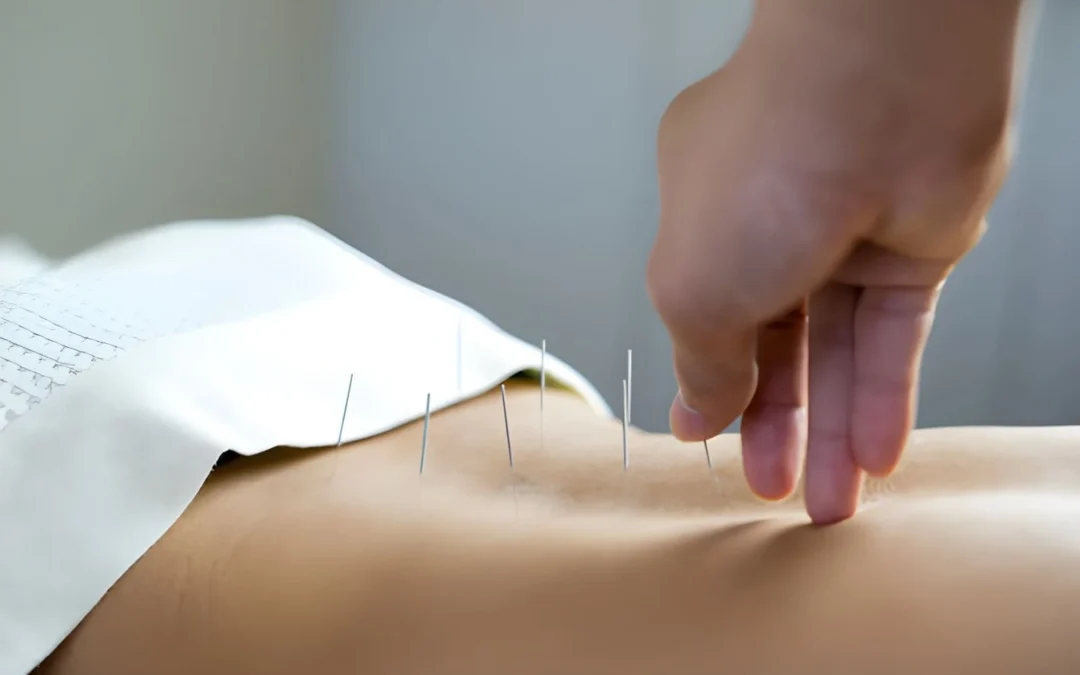
Acupuncture for hormonal imbalance often becomes part of the conversation after months, or even years, of feeling like something is off. A cycle that won’t settle into a pattern. PMS that seems to take over half the month. Fatigue, sleep changes, mood swings, breakouts, fertility concerns, or a sense that the body isn’t responding the way it used to.
For many women, the hardest part isn’t just the symptoms. It’s the uncertainty. Labs may be confusing. Symptoms may shift from month to month. One person is told stress is the issue, while another is told to wait and see. That can leave a woman feeling dismissed, overwhelmed, or disconnected from her own body.
Acupuncture offers a gentler, more whole-body way to support regulation. In women’s health, it’s often used alongside medical care to help with cycle balance, reproductive health, stress response, and symptom relief. In a practice focused on fertility and hormone-related concerns in Miami, this work is rarely about chasing one isolated symptom. It’s about understanding the pattern underneath it.
Struggling with Hormonal Imbalance Symptoms
Hormonal imbalance rarely shows up as one neat problem. It usually appears as a cluster of frustrating changes that seem unrelated until they keep repeating. A woman may come in because of irregular periods, then mention headaches before menstruation, trouble sleeping, breast tenderness, spotting, anxiety, or difficulty conceiving.
Some women feel like they’re doing everything right and still not getting answers. They’re eating well, exercising, taking supplements, and tracking their cycles, but their body still feels unpredictable. Others have been told their symptoms are common, yet common doesn’t mean easy to live with.
That’s especially true with conditions such as PCOS, where hormone patterns can affect ovulation, skin, energy, mood, and fertility all at once. For women dealing with that picture, learning more about PCOS support through acupuncture can help connect the dots between symptoms and treatment.
A careful acupuncture evaluation doesn’t just ask whether periods are early or late. It looks at flow, pain, clotting, cervical fluid, digestion, sleep, stress load, body temperature, and the timing of symptoms across the month. That matters because two women can both have “irregular cycles” and need very different treatment approaches.
The trade-off is that acupuncture isn’t usually a one-visit fix. It tends to work best when care is consistent and timed to the body’s rhythm. Women who expect a gradual process often do better than those hoping for instant change.
How Acupuncture May Support Hormonal Balance
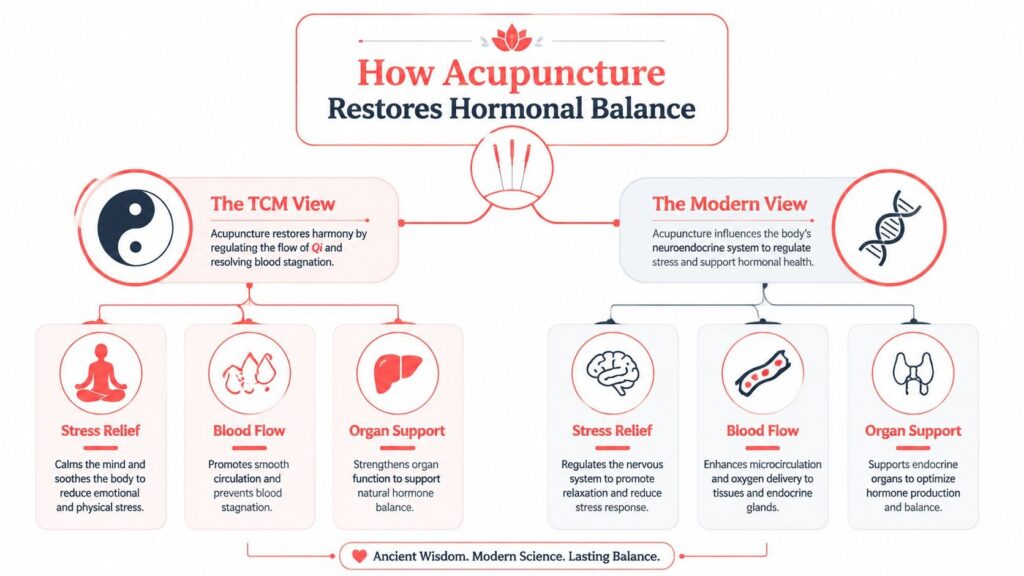
Acupuncture for hormonal imbalance makes more sense when it’s viewed from both Traditional Chinese Medicine and modern physiology. These frameworks use different wording, but they often point toward the same clinical reality. The body regulates best when communication, circulation, and recovery are working well.
The traditional Chinese medicine view
In TCM, hormone symptoms aren’t reduced to one gland or one lab value. The practitioner looks for patterns involving Qi, Blood, Yin, Yang, and organ system relationships. If Qi becomes constrained, symptoms may show up as breast tenderness, irritability, PMS, or a cycle that feels stuck. If Blood is weak or not flowing smoothly, a woman may notice scant periods, delayed cycles, cramping, dizziness, or fatigue.
This is why treatment points aren’t chosen from a generic hormone protocol. The body is assessed as a system. A patient with stress-related cycle disruption may need a different approach than someone recovering from long-term depletion after years of heavy periods, postpartum changes, or repeated fertility treatment.
For patients who want a deeper understanding of this lens, Jing, Qi, and Shen in Chinese medicine offer a helpful foundation.
The modern biomedical view
From a biomedical perspective, one useful way to think about hormonal balance is as a communication network. The hypothalamic-pituitary-ovarian axis acts a bit like a conductor coordinating the timing of the menstrual cycle. If signaling becomes inconsistent, the ovaries, uterine lining, and cycle symptoms can all reflect that disruption.
Acupuncture is often discussed in relation to the neuroendocrine system because it may influence stress signaling and reproductive hormone regulation. A 2018 review summarizing 14 studies reported that acupuncture was associated with increases in estradiol, progesterone, and prolactin, with some PCOS-focused studies also noting changes in the FSH/LH ratio.
That doesn’t mean acupuncture forces the body into one fixed hormonal state. It means it may support regulation in systems that have become dysregulated.
What tends to work best
Clinical response usually improves when treatment is matched to the patient’s actual pattern, not just the diagnosis. That includes timing sessions around ovulation, the luteal phase, IVF stimulation, or the menopausal transition when needed.
A few practical truths matter here:
- Consistency matters: Sporadic visits are less useful than a plan followed with some regularity.
- Timing matters: Treatment often works better when it reflects where a woman is in her cycle or fertility treatment.
- Lifestyle still matters: Sleep, nutrition, stress load, and over-exercising can keep pushing the system off balance.
- Acupuncture is complementary: It can support care, but it shouldn’t replace needed medical evaluation for thyroid concerns, severe bleeding, missing periods, or fertility workups.
Common Conditions Supported by Hormone-Balancing Acupuncture
Women rarely seek care because they want “better hormones” in the abstract. They come because something specific is disrupting daily life, relationships, sleep, or fertility plans. Hormone-balancing acupuncture is usually shaped around that lived experience.
PCOS and irregular cycles
With PCOS, treatment often focuses on encouraging more regular ovulatory function, supporting circulation to the reproductive organs, and reducing the stress burden that can aggravate symptoms. Some women mainly notice long or unpredictable cycles. Others are more troubled by acne, hair changes, or difficulty identifying if ovulation is happening at all.
In TCM terms, this may involve moving stagnation, resolving dampness, and strengthening underlying deficiencies. In practical terms, the goal is to help the cycle become more readable and more coordinated over time.
PMS and PMDD patterns
Not all PMS is the same. One woman may become irritable and bloated before her period. Another may feel weepy, exhausted, headachy, and unable to sleep. Acupuncture care is adjusted to those differences.
Perimenopause and menopause transitions
Perimenopause can feel especially confusing because symptoms may fluctuate from month to month. A woman may have a shorter cycle one month, a skipped period later, then nights of waking hot, followed by brain fog or anxiety that wasn’t there before.
Acupuncture is often used here to calm the nervous system, ease heat patterns, support sleep, and reduce the rollercoaster feeling many women describe. The aim isn’t to make perimenopause disappear. It’s to help the transition feel more manageable.
Thyroid-related symptom patterns
Women with thyroid concerns often come in with a mix of fatigue, cycle disruption, constipation, cold hands and feet, hair shedding, or fertility concerns. Acupuncture doesn’t replace endocrine care or lab monitoring, but it may be used to support the broader symptom pattern.
This is one area where coordination matters. If a woman is already working with an endocrinologist or primary care physician, acupuncture fits best when it complements that care rather than competing with it.
Fertility support and cycle preparation
When hormone imbalance affects fertility, the conversation changes. The focus shifts from symptom relief alone to ovulation quality, cycle timing, uterine environment, and readiness for conception or treatment. Women with painful periods or a history suggestive of endometriosis-related fertility concerns may need a more layered plan.
A simple comparison can help:
| Concern | Treatment focus |
| Irregular ovulation | Cycle tracking, timing support, stress regulation |
| PMS and luteal symptoms | Calming premenstrual reactivity and supporting the second half of the cycle |
| Hot flashes and sleep changes | Nervous system support and symptom relief |
| Fertility preparation | Whole-cycle regulation and reproductive support |
What usually doesn’t work is treating every woman with the same points every week, regardless of symptoms. Hormone care needs nuance.
A Look at the Supporting Research
Research on acupuncture for hormonal and reproductive health has grown more clinically relevant because it looks at measurable outcomes, not just general wellness impressions. For women trying to conceive or preparing for assisted reproduction, the most useful studies are the ones that examine ovulation, hormone regulation, and the uterine environment.
What the fertility research suggests
A review on acupuncture in assisted reproduction and reproductive endocrinology reports several findings that matter in fertility-focused care. For women with PCOS, studies suggest acupuncture may increase ovulation frequency and reduce testosterone levels. The same review also discusses how acupuncture may enhance endometrial receptivity by modulating hormone levels and increasing glandular development in the uterine lining.
That matters because implantation isn’t only about having an embryo. The uterine environment also needs to be receptive at the right time. In IVF settings, this is one reason some fertility clinics and acupuncturists coordinate treatment around stimulation, retrieval, and transfer timing.
The same review notes that clinical protocols often involve 6-12 sessions given once or twice weekly, and that preconditioning acupuncture started before fertility treatment showed better outcomes than beginning only at the last minute during treatment itself. Many fertility-focused acupuncture plans use repeated sessions over several weeks or months, especially when care is timed around cycle phases or assisted reproduction. The ideal frequency varies by patient, diagnosis, and treatment plan.
Why practitioner training matters
Hormonal cases aren’t plug-and-play. Fertility treatment cycles can change quickly, medications can affect symptoms, and treatment plans may need to be adjusted phase by phase. The same review notes access to NCCAOM-certified practitioners across many U.S. states and Washington, D.C., which supports a more standardized level of training in the field.
That’s especially important for women navigating PCOS, IVF, recurrent loss concerns, or complex cycle patterns. Research can guide care, but skillful interpretation still matters.
Your Personalized Treatment Plan at Longevity Acupuncture
For hormone-related concerns, the first appointment should feel organized, not rushed. A thoughtful plan starts by understanding the person’s history in detail. That includes cycle patterns, fertility goals, diagnoses, medications, previous treatment, digestive health, sleep, stress, and any available lab work.

What a first visit usually includes
A women’s health intake often goes beyond the question of whether periods are regular. It looks at how symptoms unfold over the month. Is ovulation delayed? Is bleeding heavy or light? Is there spotting, clots, cramping, insomnia before the period, or anxiety after ovulation? Those details shape the treatment strategy.
In a Miami fertility-focused setting such as Longevity Acupuncture, that process may also include reviewing where a patient is in natural conception efforts, IVF, or IUI planning, and whether dietary guidance, herbs, or lifestyle support make sense within the broader care plan.
How treatment planning is tailored
Not every woman needs the same frequency or timeline. Someone with mild PMS and otherwise regular cycles may need a different approach than someone with long-standing irregular ovulation who’s preparing for embryo transfer. Fertility patients are often encouraged to think in terms of a 2- to 3-month preparation window because the follicles that may ovulate in a future cycle are developing during that period. This does not guarantee outcomes, but it gives time to address sleep, nutrition, stress, medical care, and supportive therapies.
A personalized plan may include:
- Cycle-based acupuncture: Visits are timed to follicular, ovulatory, or luteal needs.
- Fertility coordination: Care may be scheduled around monitoring appointments, retrieval, transfer, or IUI.
- Lifestyle guidance: Sleep, exercise intensity, stress load, and nutrition are reviewed because they can affect hormone regulation.
- Adjunctive support: When appropriate, herbal medicine or supplement review may be part of the conversation.
What usually helps most is a plan that’s realistic enough to follow. If a treatment schedule is too intense for a patient’s actual life, consistency tends to fall apart. Good care meets the biology and the logistics at the same time.
Frequently Asked Questions
Does acupuncture for hormonal imbalance hurt?
Most patients describe acupuncture needles as very fine and far gentler than they expected. Some points may create a brief sensation such as tingling, heaviness, warmth, or a dull ache, but treatment is usually well tolerated. Many women feel relaxed during the session.
How many sessions are usually needed?
That depends on the goal and the complexity of the pattern. Hormone-related issues usually respond better to consistent care over time than to occasional visits. A recent symptom pattern may shift sooner than a long-standing cycle or fertility issue.
Is it safe during fertility treatment?
When performed by a licensed practitioner, acupuncture is commonly used alongside fertility care. It’s often scheduled around cycle phases, IUI, or IVF milestones with the goal of supporting the patient, not replacing reproductive medicine. The key is using a provider who understands when and how to modify treatment.
Can patients keep seeing their regular doctor?
Yes. They should. Acupuncture works best as complementary care. Women with thyroid concerns, absent periods, severe pain, heavy bleeding, or fertility challenges still need proper medical evaluation and follow-up.
What should patients bring to the first visit?
It helps to bring cycle information, recent lab work if available, a list of medications and supplements, and notes about symptom timing. The clearer the pattern, the more customized the treatment can be.
Start Your Path to Better Balance Today
Hormone symptoms can wear a woman down slowly. What begins as a few “off” cycles can turn into months of uncertainty, frustration, and second-guessing. Support matters, especially when the goal is not only to feel better, but also to protect fertility, move through perimenopause more comfortably, or understand what the body has been trying to say.
Acupuncture offers a measured, whole-person approach. It may help support regulation, reduce symptom burden, and create a steadier foundation for reproductive health when used as part of a thoughtful care plan. It isn’t magic, and it isn’t a substitute for medical care. But for many women, it becomes a meaningful part of getting back in sync.
Acupuncture should not replace medical evaluation for absent periods, severe pelvic pain, heavy bleeding, thyroid symptoms, suspected pregnancy complications, recurrent miscarriage, or infertility. Patients should work with a qualified medical provider for diagnosis and testing.
For women in Miami, Coral Gables, Pinecrest, Coconut Grove, and across South Florida, a personalized evaluation can help clarify the next step. Care should reflect the cycle, the symptoms, the medical context, and the woman behind all of it. That’s the value of a careful approach to acupuncture for hormonal imbalance.
If hormone symptoms, irregular cycles, fertility concerns, or perimenopausal changes have been difficult to manage, Longevity Acupuncture offers consultations in Miami to discuss a personalized plan with Dr. Vivian Shou-Litman.