
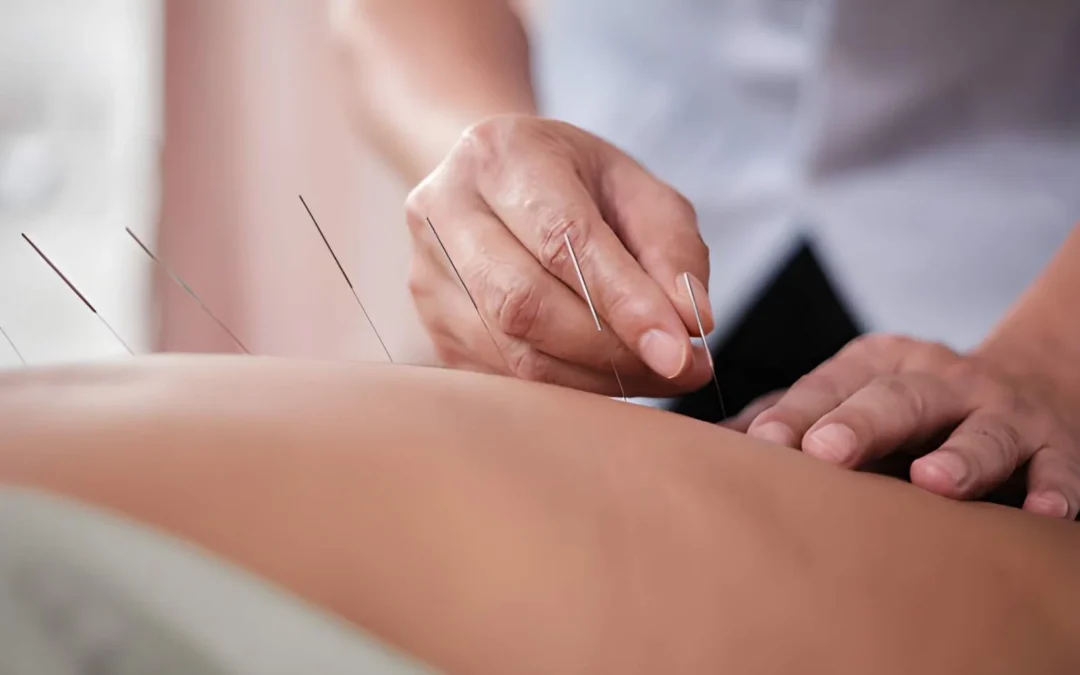
How does acupuncture help fertility? For many people, that question comes after months of cycle tracking, medical appointments, supplements, and quiet worry. Some are trying to conceive naturally and wondering whether acupuncture for fertility can support hormone balance or regular ovulation. Others are already in the middle of IVF or IUI and want something steady, calming, and evidence-aware alongside medical care.
The most useful answer is also the most honest one. Acupuncture isn’t a magic fix, and it doesn’t replace a fertility workup or treatment from a reproductive endocrinologist. What it may do is support the body in ways that matter during conception efforts, including stress regulation, cycle support, and a more personalized, whole-body approach to reproductive health.
That matters because infertility rarely stems from just one issue. A person may be dealing with irregular cycles, painful periods, thin uterine lining, endometriosis, PCOS, unexplained infertility, poor sleep, or the mental strain of trying month after month. A thoughtful fertility acupuncture plan looks at the bigger picture rather than focusing on a single symptom.
In our practice serving Miami, South Miami, Coral Gables, Pinecrest, Coconut Grove, and the wider South Florida community, fertility support often works best when it’s both grounded and compassionate. People need clear information, but they also need care that acknowledges how vulnerable this process can feel.
A Supportive Path on Your Fertility Journey
When someone asks, “How does acupuncture help fertility?” the question usually carries more than curiosity. It often carries disappointment, urgency, guarded hope, and the exhaustion of trying to make good decisions with limited emotional bandwidth.
Acupuncture for fertility is best understood as complementary support. It may help create a healthier internal environment for conception by supporting cycle regulation, easing stress, and addressing patterns that can affect reproductive wellness. It also gives patients something many fertility experiences lack, which is time to slow down, be heard, and receive individualized care.
Some people come in before they have seen a fertility specialist. Others arrive with lab work, ultrasound findings, or a clear IVF calendar already in hand. Both situations can benefit from a treatment plan that looks at the whole person, including menstrual history, sleep, digestion, stress load, energy, pain patterns, and past pregnancy history.
This doesn’t mean every person needs the same approach. Acupuncture for fertility should never be one-size-fits-all. A person with PCOS needs different support than someone with recurrent implantation concerns, diminished ovarian reserve, or severe premenstrual symptoms.
A realistic fertility plan usually includes several moving parts:
- Medical clarity: If cycles are absent, very irregular, or unusually painful, a medical evaluation matters.
- Consistent treatment: Acupuncture tends to work better as part of a planned course of care than as a single session done at random.
- Lifestyle support: Sleep, nourishment, stress load, movement, and timing all influence the bigger picture.
- Emotional steadiness: Trying to conceive can feel isolating. Calmer nervous system support often matters more than people expect.
That combination is often where fertility acupuncture becomes most valuable.
How Acupuncture May Influence Fertility: A Modern View
So, how does acupuncture help fertility? A modern explanation starts with this point: acupuncture may affect several systems at once rather than acting through a single pathway. That matters in fertility care, because ovulation, uterine receptivity, hormone signaling, sleep, and stress are closely connected.
A helpful visual summary appears below.
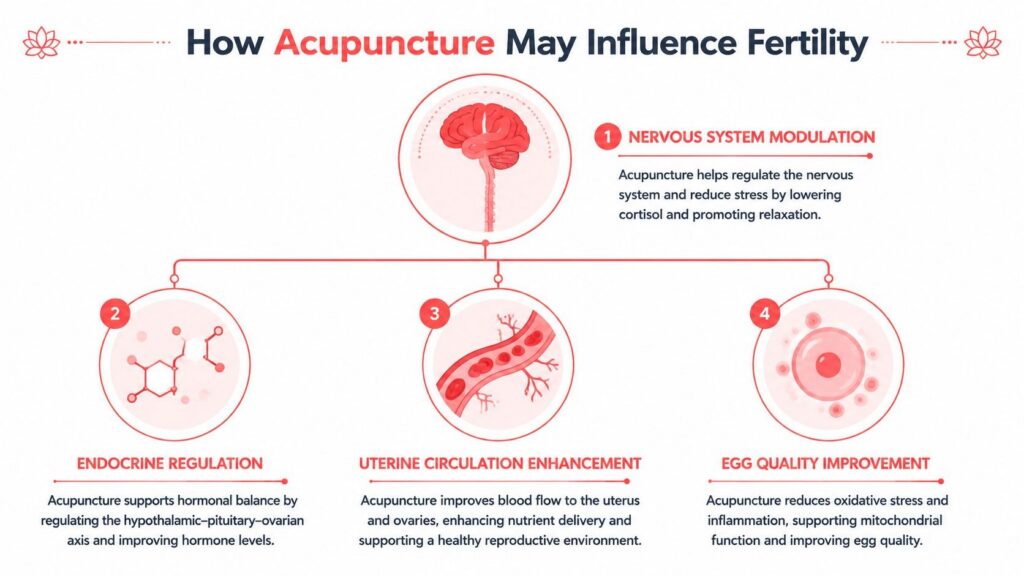
One evidence-based point is worth noting clearly. A 2022 systematic review and meta-analysis by Quan et al. included 27 randomized controlled trials with 7,676 participants and found that acupuncture used as an adjunctive treatment for female infertility was associated with improved clinical pregnancy, live birth, biochemical pregnancy, ongoing pregnancy, and implantation outcomes compared with controls. However, the authors noted that more high-quality randomized trials are needed.
Blood flow and tissue support
One reason patients seek acupuncture for fertility is the idea of better support for the ovaries and uterus. In clinical practice, this often translates into treatment aimed at helping the body maintain good circulation and reducing physiologic tension.
That doesn’t mean acupuncture mechanically forces fertility to happen. It means practitioners often use it to support the conditions the reproductive system depends on. Follicles develop within a complex hormonal and vascular environment, and the uterine lining also depends on healthy support from the body as a whole.
A practical way to think about this is that reproductive tissues need steady communication, nourishment, and regulation. If a patient has a history that suggests poor cycle quality, chronic stress, or a difficult response during treatment, acupuncture may be used to support the system rather than chase a single symptom.
Hormone signaling and cycle regulation
Hormones don’t work in isolation. The brain, ovaries, adrenals, thyroid, and broader nervous system are all part of the conversation. Acupuncture is often used with the goal of supporting that signaling network.
For some patients, the main issue isn’t that one hormone is “low” or “high.” It’s that the rhythm is off. Cycles may be inconsistent. Ovulation may be delayed. Sleep may be poor. Stress may be constant. In those cases, treatment often focuses on restoring steadiness.
This is one reason fertility acupuncture can fit naturally into both natural conception care and assisted reproduction. The same person may need help with irregular cycles before treatment, then need calm, cycle-specific support during stimulation or transfer. Patients exploring that combination often look for care that works alongside medical protocols, such as this overview of acupuncture and IVF support working together.
Stress response and fertility care
Stress isn’t the sole cause of infertility, but the body’s stress response does affect sleep, digestion, muscle tension, inflammation patterns, and the felt experience of going through fertility treatment.
Many patients notice that fertility acupuncture becomes one of the few times all week when their body downshifts. A person who is bracing through every appointment, scanning every symptom, and sleeping poorly is carrying a heavy physiologic load.
A calmer nervous system doesn’t guarantee conception. What it can do is make the process more sustainable. In real life, that often means fewer spirals between appointments, better treatment adherence, and more resilience during the uncertain parts of trying to conceive.
Understanding Fertility From a TCM Perspective
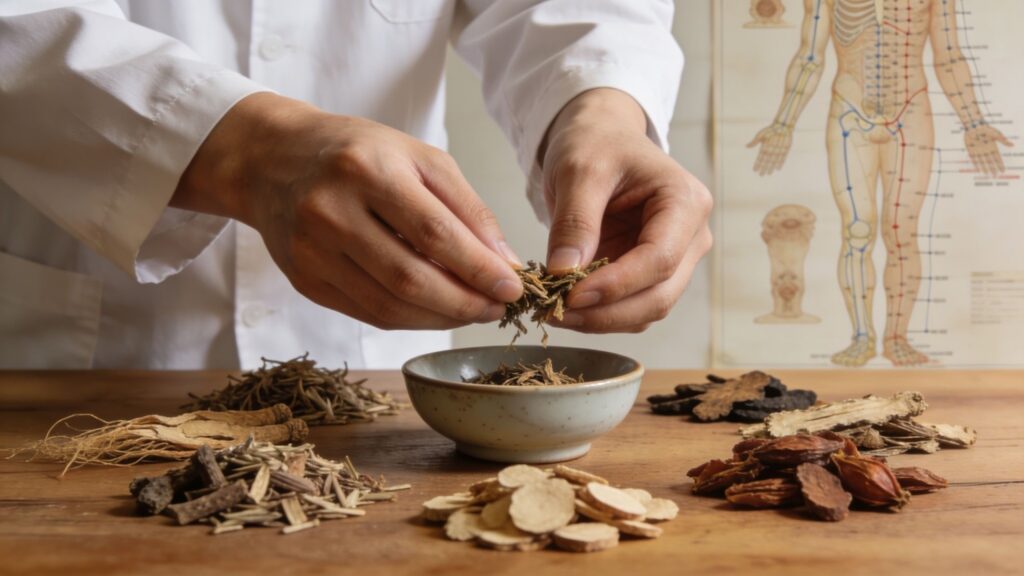
Traditional Chinese Medicine looks at fertility through a different lens than conventional reproductive medicine. Instead of asking only whether ovulation happened or what a lab value shows, it asks how the whole system is functioning. Is energy moving smoothly? Is there enough nourishment? Is the body showing signs of depletion, stagnation, heat, or cold?
That framework can be surprisingly practical when it’s explained clearly.
Qi Blood and Kidney Essence in plain language
In TCM, Qi is often described as the body’s functional energy. For fertility, that can be thought of as movement, timing, and smooth coordination. When Qi is constrained, patients may notice PMS, mood changes, irregular cycles, or the sense that the body feels “stuck.”
Blood in TCM isn’t identical to a lab measurement. It refers more broadly to nourishment and substance. In fertility care, a Blood-deficient pattern may show up in ways such as scant periods, dryness, fatigue, or a history that suggests the body isn’t building strong support each cycle.
Kidney Essence, often called Jing, is linked to reproductive vitality, development, and reserve. In modern fertility conversations, this is often the concept patients connect with when talking about age-related change, diminished ovarian reserve, or repeated depletion after long periods of stress and treatment.
A readable introduction to that broader philosophy appears in this article on using Chinese medicine to support fertility.
Why pattern diagnosis matters
Two patients can carry the same diagnosis and need very different care. One person with irregular cycles may run hot, feel irritable before a period, and have painful clotting. Another may feel cold and tired, and may have light bleeding. TCM doesn’t treat those as identical just because the chart says “irregular cycles.”
That’s one reason root-cause care matters. A treatment plan may change across the menstrual cycle and over time as the body responds. If a patient is preparing for pregnancy here in Miami or South Florida, personalized care often means looking beyond one label and asking what pattern is driving the symptoms.
A TCM fertility assessment often considers:
- Cycle quality: timing, flow, pain, spotting, and PMS patterns
- Whole-body signs: sleep, digestion, temperature, headaches, energy, and stress response
- Reproductive history: past pregnancies, miscarriage history, IVF response, and recovery from hormonal treatment
- Constitution: whether the body appears more depleted, tense, inflamed, sluggish, or easily drained
This is also where trade-offs become real. A highly reactive cycle may need more calming and regulation before moving into stimulation support. A depleted patient may need steadier rebuilding care rather than aggressive symptom-chasing. Good acupuncture for hormone balance doesn’t force the same plan onto every body.
Tailoring Treatment for Your Fertility Goals
Fertility treatment works best when the timing aligns with the goal. A person trying naturally doesn’t need the same schedule as someone preparing for retrieval or transfer. Acupuncture for fertility is most useful when it follows a roadmap instead of being squeezed in whenever stress peaks.
Trying to conceive naturally
A common starting point is a three-month preparation window. That approach matters because egg maturation takes about 90 days, so treatment before conception attempts can focus on the conditions influencing that process. In practice, that often means supporting cycle regularity, ovulation patterns, stress regulation, sleep, and overall resilience.
Patients trying naturally may benefit from a plan that follows the phases of the menstrual cycle:
| Phase | Treatment focus |
| Menstrual phase | Support smooth flow and reset after the previous cycle |
| Follicular phase | Encourage nourishment, recovery, and healthy cycle development |
| Ovulation window | Support timing, regulation, and overall reproductive balance |
| Luteal phase | Focus on calm, stability, and support for implantation conditions |
This doesn’t mean every patient needs a long runway before trying. It means preparation often gives acupuncture for egg quality, irregular cycles, or hormone balance more room to be useful.
Support during IVF and IUI
For IVF or IUI, treatment usually becomes more protocol-specific. The point isn’t to replace medical treatment. It’s to support the body through the demands of treatment while coordinating with the fertility clinic’s schedule.
A cycle-specific plan may include:
- Before stimulation: Support baseline regulation and nervous system steadiness.
- During stimulation: Help patients cope with physical and emotional intensity as the ovaries are being medically stimulated.
- Before egg retrieval: Focus on comfort, regulation, and readiness.
- After retrieval: Support recovery and help the body settle.
- Before embryo transfer: Promote a calm, receptive state.
- After transfer: Continue gentle support while avoiding over-treatment.
In South Florida, some patients want a clinic that communicates well with their reproductive team and understands how to time care around a moving IVF calendar. That’s where a fertility-focused practice can be helpful. Longevity Acupuncture offers fertility acupuncture, IVF/IUI support, and treatment planning built around menstrual cycles and assisted reproduction timelines.
What tends to help and what usually doesn’t
The most effective fertility acupuncture plans are usually the least dramatic. They are structured, responsive, and realistic.
What tends to help:
- Consistency: Regular treatment has more value than scattered visits.
- A clear diagnosis: The best plans are based on history, symptoms, and current goals.
- Combined support: Diet, sleep, stress care, and medical follow-through all matter.
- Flexibility: Treatment should change if a cycle changes.
What usually doesn’t:
- Starting after a long delay and expecting instant results
- Using one generic protocol for every fertility issue
- Ignoring major symptoms that need medical evaluation
- Treating acupuncture as a substitute for fertility medicine when medical care is needed
That balance is often what makes acupuncture feel supportive rather than confusing.
What to Expect at Longevity Acupuncture
The first appointment matters because many fertility patients arrive guarded. They may be overwhelmed by information, tired of repeating their story, or unsure whether acupuncture will feel calming or just like one more thing to manage.
At a dedicated fertility practice in Miami, the experience should feel organized and personal rather than rushed.
The first visit
The initial consultation usually begins with a detailed review of health history. That can include menstrual cycle patterns, prior pregnancies, fertility testing, medications, IVF or IUI timelines, sleep, digestion, stress, and other whole-body symptoms that may affect treatment planning.
Dr. Vivian Shou-Litman is a Florida-licensed acupuncture physician and NCCAOM Diplomate of Oriental Medicine, with a clinical focus on women’s health and fertility. For new fertility patients, the process often starts with the clinic’s fertility intake form, which helps organize medical history and treatment goals before care begins.
Patients are often relieved by how much of the visit involves listening. Fertility care can become highly technical very quickly. It helps when someone is paying attention not just to the chart but also to how the cycle feels, how treatment has been affecting the body, and where the biggest strain is showing up.
During the treatment itself
People who are new to acupuncture often expect it to hurt more than it does. In reality, the needles are very thin, and many patients feel little more than a brief sensation on insertion, followed by warmth, heaviness, tingling, or deep relaxation.
Once the needles are placed, the room is usually quiet and restful. That pause can be meaningful for fertility patients who have spent weeks or months in a constant state of anticipation.
The treatment itself is customized to the individual. A patient with anxiety before an embryo transfer may need a very different session than someone working on cycle regulation before trying to conceive naturally. The same is true for someone recovering after retrieval, dealing with period pain, or trying to support a healthier luteal phase.
How a plan is built over time
A good plan doesn’t stop with one appointment. It adjusts as the body responds and as fertility goals change.
That plan may include:
- Acupuncture timing: Scheduled around the menstrual cycle or fertility procedure dates
- Lifestyle guidance: Support for sleep, stress load, movement, and nourishment
- Herbal or supplement discussion: When appropriate and when it fits safely with medical care
- Coordination: Adjusting care around IVF medications, monitoring appointments, or changing timelines
This kind of care can be especially helpful for patients in Miami, Coral Gables, Pinecrest, or Coconut Grove who want fertility support that feels both clinically informed and emotionally steady. The treatment room should feel like a place where the body can soften a bit, not another place where pressure builds.
Common Questions About Fertility Acupuncture
Is fertility acupuncture safe, and does it hurt
When performed by a licensed practitioner, fertility acupuncture is generally considered safe as complementary care. It should always be customized to the person’s medical situation, cycle phase, and treatment plan.
Most patients say the needles feel much gentler than they expected. The sensation is often brief. After that, many people notice a heavy, warm, or relaxed feeling rather than pain.
How often do treatments usually happen
Frequency depends on the goal. Many people begin with regular weekly sessions, then adjust based on cycle response, symptoms, and whether they’re trying naturally or going through IVF or IUI.
A person preparing for conception may follow a steadier month-to-month rhythm. Someone in an IVF cycle may need visits timed around stimulation, retrieval, or transfer. The key is consistency and fit, not chasing a rigid formula.
How to choose a qualified fertility acupuncturist
Look for someone who is licensed in the state where they practice and who has specific experience in women’s health and fertility. In Florida, patients should confirm active professional licensure. NCCAOM certification is another meaningful credential to look for.
It also helps to choose a practitioner who understands assisted reproduction and can communicate clearly about what acupuncture can and can’t do. Patients in Miami, South Miami, Coral Gables, or Pinecrest often do best with someone who regularly treats fertility concerns rather than only offering general wellness acupuncture.
Can a partner receive acupuncture too
Yes. Fertility support doesn’t have to focus on one partner alone. In some cases, acupuncture may also be used as complementary support for male fertility concerns, stress, sleep issues, or the overall strain of the process.
That can be especially helpful when both partners want to feel actively involved. Even when one person is carrying the medical treatment, fertility is often easier to manage when support is shared.
If you’re wondering, “How does acupuncture help fertility?” a consultation can help clarify whether it fits the current plan, whether that means cycle regulation, IVF support, or whole-body reproductive care. Patients in Miami and South Florida can learn more or request an appointment through Longevity Acupuncture, where care is personalized, evidence-aware, and designed to meet people where they are.